The Sacred Morning Ritual: Banitsa, Ayran & Boza
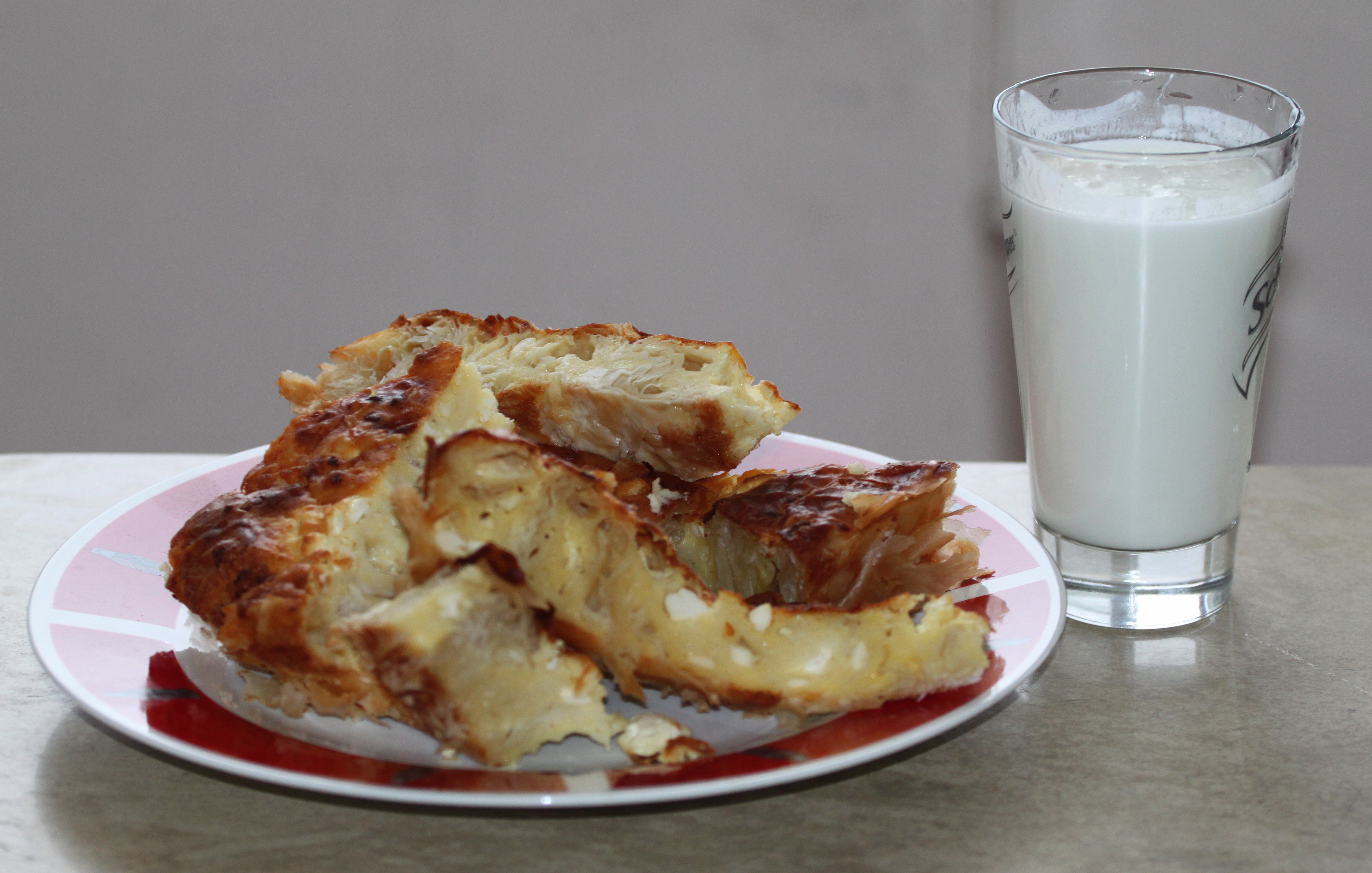
To understand Bulgarian daily rhythm, step outside before 09:00 AM and follow the aroma of melting butter and toasted pastry to the nearest neighborhood banicharnitsa (specialized banitsa bakery). The centerpiece of Bulgarian culinary culture is banitsa (баница)—a spiral or layered pastry formed from razor-thin leaves of handmade phyllo dough brushed with butter, filled with a rich mixture of whisked eggs and crumbly white brined cheese (sirene), and baked in colossal circular pans until the crust is golden-brown and shattering.
Every morning across Sofia, thousands of commuters stand outside bakeries holding a paper-wrapped banitsa in one hand and their beverage of choice in the other:
- Ayran (айрян): The universal crowd favorite. Fresh Bulgarian yogurt whisked with cold spring water and a pinch of sea salt. The tart creaminess cuts through the rich butteriness of the pastry with refreshing perfection.
- Boza (боза): A thick, beige, fermented beverage made from toasted wheat, rye, or millet. Originating during Ottoman times, boza has a sweet-and-sour, slightly malty flavor and a negligible alcohol content (under 1%). First-time foreign visitors either fall in love with its malty tang or find its texture surprising—tasting boza is an indispensable Sofia rite of passage.
Sofia's Post-Socialist Klek Shops: The Kneel-Down Kiosks
Walking down Tsar Shishman, Neofit Rilski, or Georgi Rakovski streets, look closely at the basement windows right at pavement level. You will encounter one of Sofia's most captivating urban architectural curiosities: the klek shop (klek magazin, derived from the Bulgarian word for squatting or kneeling).
Following the collapse of communism in 1989, private enterprise was legalized, but commercial retail space on central boulevards was virtually nonexistent or prohibitively expensive. Resourceful Sofia apartment owners in pre-war residential buildings began knocking out the iron grates of their private storage cellars facing the street. They hung glass display shelves inside the basement window and placed small neon signs on the sidewalk. Because the service window is situated at ankle level, customers must physically crouch down on the pavement to converse with the storekeeper, order cold Zagorka beer, Bulgarian wafers (vafli), bottles of mineral water, or cigarettes, and receive their change passed upward through the tiny window frame.
While modern supermarket chains like Billa and Kaufland have proliferated, dozens of historic klek shops still operate around the city center, serving late-night partygoers and local neighbors 24 hours a day.
The Mehana Experience: Clay Pots, Sizzling Saches & Rakia
Dining in an authentic mehana (traditional Bulgarian tavern) is an immersive sensory celebration. The interior decor features heavy dark oak tables, whitewashed walls hung with handwoven red-and-white Rhodope carpets (chergi), antique copper cauldrons, and ceramic pottery. An authentic Bulgarian dinner unfolds in distinct, unhurried stages:
1. Salads & Rakia Aperitif
Order a classic Shopska Salata (diced pink tomatoes, cucumbers, baked red peppers, topped with an avalanche of grated sirene cheese) or Snezhanka (Snow White salad made of strained yogurt, garlic, walnuts, and dill). Sip chilled grape rakia (50 ml) slowly alongside your salad.
2. Warm Starters
Sample Chushki Biureki (roasted sweet red bell peppers stuffed with cheese and herbs, breaded and fried crisp) or warm Kashkaval Pane (fried breaded yellow sheep cheese drizzled with wild mountain honey).
3. Sizzling Saches & Skara
The main course arrives sizzling audibly on a volcanic clay or cast-iron plate (sach), loaded with seasoned pork fillet, chicken, smoked bacon, wild mushrooms, onions, and melted cheese, accompanied by grilled kebapcheta.
5,000 Years of Wine: Indigenous Bulgarian Grapes to Order
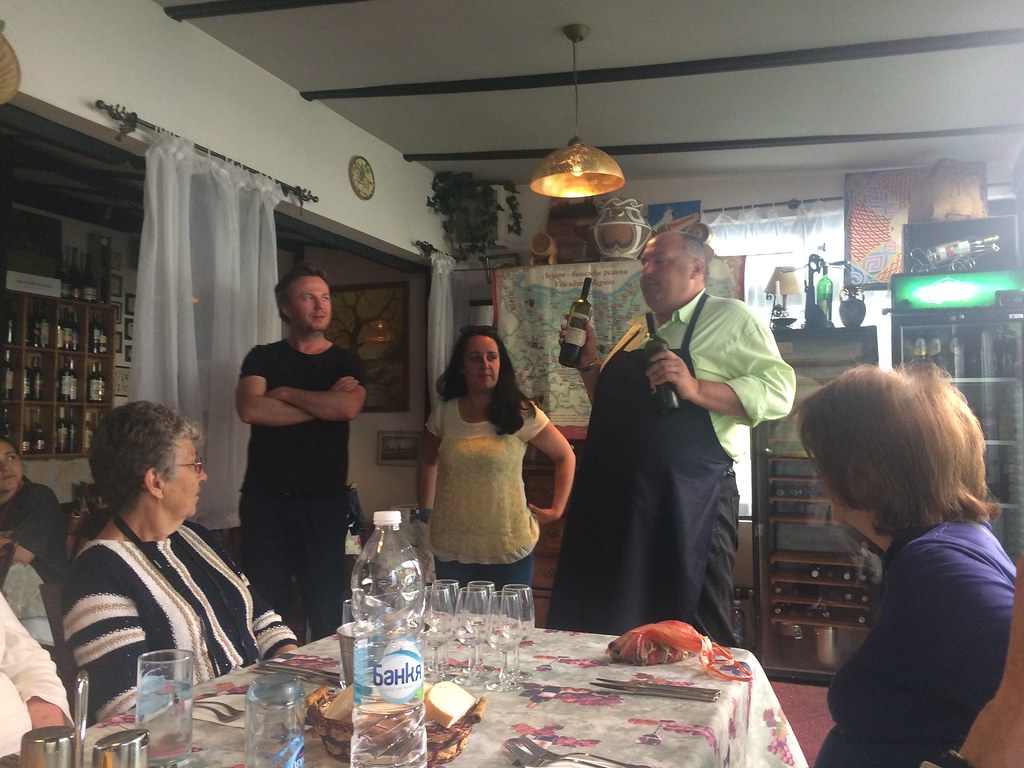
Bulgaria's winemaking heritage spans over five millennia, inherited directly from ancient Thracian tribes who worshipped Dionysus (Zagreus) across these mountain valleys. Homer's Iliad famously described Greek warriors sailing to the Thracian coast to procure the region's dark, heavy, aromatic wines. When dining in Sofia, bypass generic imported Cabernet and explore Bulgaria's remarkable indigenous varietals:
- Mavrud (Мавруд): The undisputed king of Bulgarian reds, cultivated since antiquity in the Thracian Valley around Asenovgrad and Plovdiv. Deep inky-ruby color, bold muscular tannins, high natural acidity, and complex tasting notes of wild blackberry, dark plum, bittersweet chocolate, and forest floor.
- Shiroka Melnishka Loza / Melnik 55 (Широка Мелнишка): Native to the sun-drenched, sandy microclimate of the Struma River valley near the Greek border. Winston Churchill famously ordered 500 gallons of Melnik wine delivered annually to his London cellar. Expect notes of tart sour cherry, dried fig, tobacco leaf, and subtle white pepper.
- Rubin (Рубин): A brilliant cross between Nebbiolo and Syrah engineered in Pleven in 1944. It combines the aromatic elegance and floral rose petal notes of Nebbiolo with the rich spicy black-fruit depth of Syrah.
Secret Speakeasies & Hidden Courtyard Bars
Sofia's nightlife is refreshingly unpretentious, creative, and vibrant. Follow these insider coordinates into the city's best-kept secrets:
- Hambara (Хамбара): Located at 22 Tsar Shishman Street down a pitch-black residential alleyway. Knock on the heavy wooden barn door. Inside, there is literally zero electric lighting—hundreds of melting beeswax candles illuminate hand-hewn wooden beams and mezzanines. During the 1980s, this was a secret meeting haven for anti-communist dissident writers and underground artists. Cash only.
- 5L Speakeasy Bar: Tucked on Rakovski Street behind a trick entrance disguised as a decorative key rack or bookshelf. Pull the correct key to trigger the magnetic latch into a sophisticated cocktail lounge specializing in bespoke mixology.
- Crystal Garden (Gradina Kristall): On warm evenings, Sofia's young creative crowd gathers around the Stefan Stambolov monument in Crystal Garden, drinking local craft beer (Blek Pine, Hills, Rhombus) on the grass before heading to nearby dance clubs like Yalta or Carrusel.
Curated Food, Wine & Nightlife Experiences
All experiences feature English-speaking sommeliers, reserved group spots, and free cancellation up to 24 hours prior.
 Top Local Gastronomy Pick
Sofia Wine & Cheese Tasting Experience
- Guided tasting of 5 indigenous Bulgarian wine varietals (Mavrud, Rubin, Melnik, Rikat, Pamid)
- Pairing with artisanal local Bulgarian cheeses, charcuterie, and fresh breadsticks
- Sommelier narrative covering Bulgaria's 5,000-year Thracian winemaking roots
Creative Evening & Art Workshop
Sofia Paint & Wine Experience with Bulgarian Wine
- Guided acrylic painting session led step-by-step by an English-speaking professional artist
- Complimentary bottle or generous glasses of boutique Bulgarian red or white wine
- All artist equipment provided: stretched canvas, easel, acrylic paints, and brushes
#1 Sofia Nightlife Experience
Sofia Pub Crawl of Hidden Bars
- Access 4-5 secret speakeasies, hidden garden bars, and vibrant local watering holes
- Complimentary welcome drink (beer or wine) at first venue plus free shots at subsequent stops
- Traditional Bulgarian Rakia spirit shot included
Sofia Wine & Cheese Tasting Experience
Guided tasting of 5 indigenous Bulgarian wine varietals (Mavrud, Rubin, Melnik, Rikat, Pamid)
Frequently Asked Questions About Sofia
Verified answers to practical visitor inquiries regarding Sofia tourism, prices, safety, and cultural etiquette.
The quintessential Bulgarian breakfast is banitsa—a flaky pastry made of layered filo dough filled with whisked eggs, Bulgarian yogurt, and crumbly white brined cheese (sirene), baked until golden-crisp. It is paired with either ayran (a cold, salted yogurt drink) or boza (a thick, sweet-and-sour fermented wheat or millet beverage with ancient Ottoman origins). The entire breakfast costs €1.25 to €2.00 at any neighborhood bakery.
Yes, Sofia offers remarkable dining value compared to Western Europe. A hearty lunch special (gotveno) at a downtown tavern costs between €4.00 and €7.00. A three-course dinner for two at an authentic mehana with Shopska salads, grilled meats, side dishes, and a bottle of Bulgarian Mavrud wine rarely exceeds €30.00 to €40.00 total.
Klek shops (from the Bulgarian verb 'klekam', meaning to squat or kneel) are unique micro-kiosks that emerged after the fall of communism in the 1990s. Residents converted street-facing basement cellars into micro-stores, serving customers through tiny sidewalk-level windows. Passersby literally kneel down to order cold drinks, beer, snacks, and cigarettes. You can find several well-preserved klek shops along Tsar Shishman Street, Rakovski Street, and Neofit Rilski Street.
Bulgaria has exceptional native grape varietals dating back to ancient Thracian viticulture. The top red wine is Mavrud, grown primarily in the Thracian Valley around Plovdiv, known for deep ruby color, rich tannins, and blackberry aromas. Another must-try is Shiroka Melnishka Loza (Broad-Leaved Melnik) and Melnik 55 from the sunny Struma River valley, famous for smoky cherry, dried fig, and tobacco notes. For whites, sample aromatic Dimyat, Tamianka, or Red Misket.
In Sofia restaurants and cafes, tipping is customary for good service. The standard tip is 10% of the total bill. If service was exceptional, 12% to 15% is appreciated. Note that unlike in some European countries, service charge is rarely included in the bill. You can tip in cash or ask the server to add the tip to the card terminal before tapping.