The Golden Pinnacle of Sofia: History, Construction & Materials
Rising majestically from Alexander Nevsky Square at the geographic center of Sofia's cultural district, the Patriarchal Cathedral of St. Alexander Nevsky is one of the largest Eastern Orthodox cathedrals in the world. Designed by acclaimed Russian architect Alexander Pomerantsev (who also designed Moscow's GUM department store), construction commenced in 1882 with the laying of the cornerstone and concluded with its formal consecration in September 1924.
The cathedral's scale is breathtaking: its central nave spans 3,170 square meters and comfortably accommodates up to 5,000 worshippers during major patriarchal celebrations like Easter (Velikden) and Christmas (Koleda). The monumental central dome soars to a height of 45 meters, gilded with multiple layers of 24-karat gold leaf that catches the morning Balkan sunlight. Flanking the western facade, the 53-meter bell tower houses 12 cast-bronze bells cast in Moscow, weighing an aggregate of 23 metric tons. The largest bell alone weighs 11,758 kilograms, and its low-frequency acoustic reverberation can be heard reverberating across the entire Sofia plain up to 30 kilometers away on clear mornings.
Inside, the sanctuary is a masterclass in luxurious European and Balkan stone masonry. Pomerantsev specified polished Italian and Portuguese polychrome marbles for the floor mosaics, Brazilian green onyx and alabaster for the iconostasis pillars, and Venetian mosaics for the high arches. The walls are illuminated by grand brass chandeliers crafted in Munich, including the central chandelier weighing 2,500 kilograms suspended 27 meters above the nave floor.
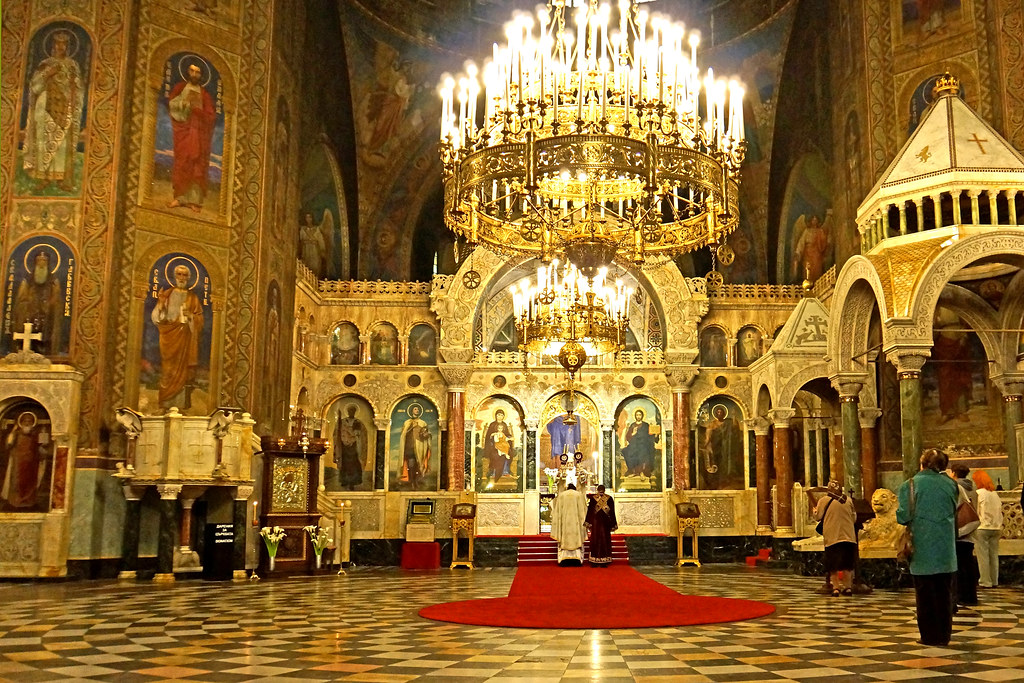
The Subterranean Crypt Museum of Christian Art (National Gallery Branch)
While millions of tourists photograph the cathedral's gilded exterior, comparatively few descend into the vast subterranean chambers directly beneath the main floor. Originally intended to serve as a pantheon and burial vault for Bulgaria's national heroes, the space was transformed in 1965 into the Crypt Museum of Christian Art, operated as a premier branch of the National Art Gallery.
The museum houses over 300 rare tempera panel icons, fresco fragments, and carved wooden iconostasis doors spanning ten centuries of Bulgarian and Balkan Christian art (from the late 9th century to the late Bulgarian National Revival in the late 19th century). Key highlights include:
- The Ceramic Icon of St. Theodore Stratelates (circa 900 CE): Unearthed near Preslav, this glazed ceramic tile icon is one of the oldest and rarest examples of First Bulgarian Empire Christian art in existence.
- The Poganovo Double-Sided Icon (circa 1395): A late-14th-century masterpiece depicting the Miracle of Christ at Latomou on the obverse and the Virgin Mary with St. John the Theologian on the reverse, commissioned by Byzantine Empress Helena Dragas.
- Ivan the Terrible's Royal Gifts: 16th-century liturgical chalices and gem-encrusted Gospel covers sent from the Tsardom of Russia to Bulgarian mountain monasteries during Ottoman suzerainty.
Experiencing Orthodox Liturgy & Choral Music
Unlike Western European cathedrals that have transitioned largely into secular museums, St. Alexander Nevsky remains the spiritual heart of the Bulgarian Orthodox Church. It is the official seat of the Patriarch of All Bulgaria. Daily liturgical life continues without interruption:
- Morning Liturgy: 08:00 AM Monday through Friday; 08:30 AM on Saturdays.
- Sunday Patriarchal Liturgy: 09:30 AM every Sunday. The cathedral choir, composed of professional opera singers and conservatory graduates, performs complex Slavic polyphony. Hearing their voices reverberate through the high marble dome without musical instruments is an unforgettable acoustic experience.
- Lighting Beeswax Candles: You can purchase thin beeswax candles at the interior counters for €0.25 to €1.00. Place candles for the living in the high, elevated candle stands; place candles commemorating deceased loved ones in the low sand-filled troughs marked Za Bog da prosti ("May God forgive").
Tours Featuring St. Alexander Nevsky Cathedral
Both free walking tours and exclusive private tours conclude or feature extensive historical stops at the cathedral plaza.
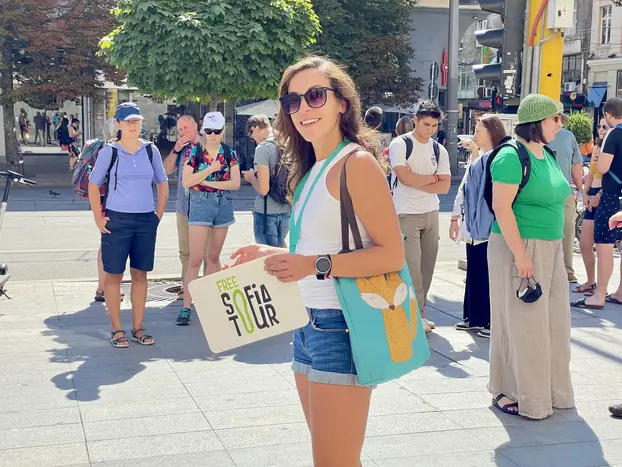
Free Sofia Walking Tour (Top Rated Historic Highlights)
- Palace of Justice meeting point with English-speaking licensed guide
- Sveta Nedelya Cathedral & Church of St. Petka of the Saddlers
- Ancient Serdica complex ruins & Largo Roman decumanus
 Exclusive Access & Interior Hidden Gems
Sofia Insider Tour with Peter (Places with limited access)
- Exclusive interior access to restricted heritage spaces and hidden chapels
- Vintage Sofia tram ride through historic residential neighborhoods
- Intimate small-group setting ensuring personalized storytelling
Sofia Insider Tour with Peter (Places with limited access)
Exclusive interior access to restricted heritage spaces and hidden chapels
Frequently Asked Questions About Sofia
Verified answers to practical visitor inquiries regarding Sofia tourism, prices, safety, and cultural etiquette.
Yes, admission to the main nave and prayer halls of St. Alexander Nevsky Cathedral is completely free. However, if you wish to visit the underground Crypt Icon Museum beneath the cathedral, admission is €10.00. A photo permit for personal interior photography costs €5.00.
The cathedral opens daily from 07:00 to 19:00. Orthodox divine liturgy is celebrated on weekday mornings at 08:00, Saturday at 08:30, and Sunday patriarchal services at 09:30. The Crypt Museum is open Tuesday–Sunday 10:00 to 18:00 (last entry 17:30, closed Mondays).
The cathedral was constructed between 1882 and 1912 to honor the estimated 200,000 Russian, Ukrainian, and Belarusian soldiers, alongside Bulgarian volunteer militias (Opalchentsi), who died during the 1877–1878 Russo-Turkish War, which liberated Bulgaria from five centuries of Ottoman rule.
Yes, absolutely. The Crypt Museum is an affiliate branch of the National Art Gallery and represents one of the world's most significant collections of Eastern Orthodox Christian art. It exhibits over 300 rare tempera panel icons, fresco fragments, and liturgical gold vessels from medieval monasteries across the Balkans.
Yes. Attending morning liturgy (especially Sunday at 09:30) allows you to experience the famed Alexander Nevsky Choir. Eastern Orthodox worship does not use organ music or instruments; the entire liturgical service is sung in stunning, resonant a cappella polyphony that fills the 3,170-square-meter marble hall.