Sofia as a Strategic Launchpad: The Crown Jewels of Bulgaria
One of Sofia's most compelling advantages for international travelers is its central geographic position. Situated in the western basin of the country at the intersection of major European transport corridors, the capital functions as an ideal base camp for exploring Bulgaria's most celebrated UNESCO World Heritage sites, alpine mountain ranges, and millennial ancient cities—all reachable within 1.5 to 2.5 hours of driving.
Whether you prefer spiritual tranquility surrounded by pine-clad 2,700-meter peaks, walking through 8,000-year-old Roman amphitheaters, or scrambling across surreal red rock canyons, the excursions below represent the absolute pinnacle of Bulgarian travel.
1. UNESCO Rila Monastery: Bulgaria's Spiritual Citadel
Tucked deep within a steep, forested mountain ravine of the Rila National Park at an elevation of 1,147 meters, the Monastery of Saint Ivan of Rila (Rilski Manastir) is Bulgaria's most revered national symbol. Founded in the 10th century by the hermit monk St. Ivan of Rila, who lived in an ascetic stone cave above the current cloister, the monastery served as a fortress of Bulgarian language, Orthodox faith, and literacy throughout five centuries of Ottoman rule.
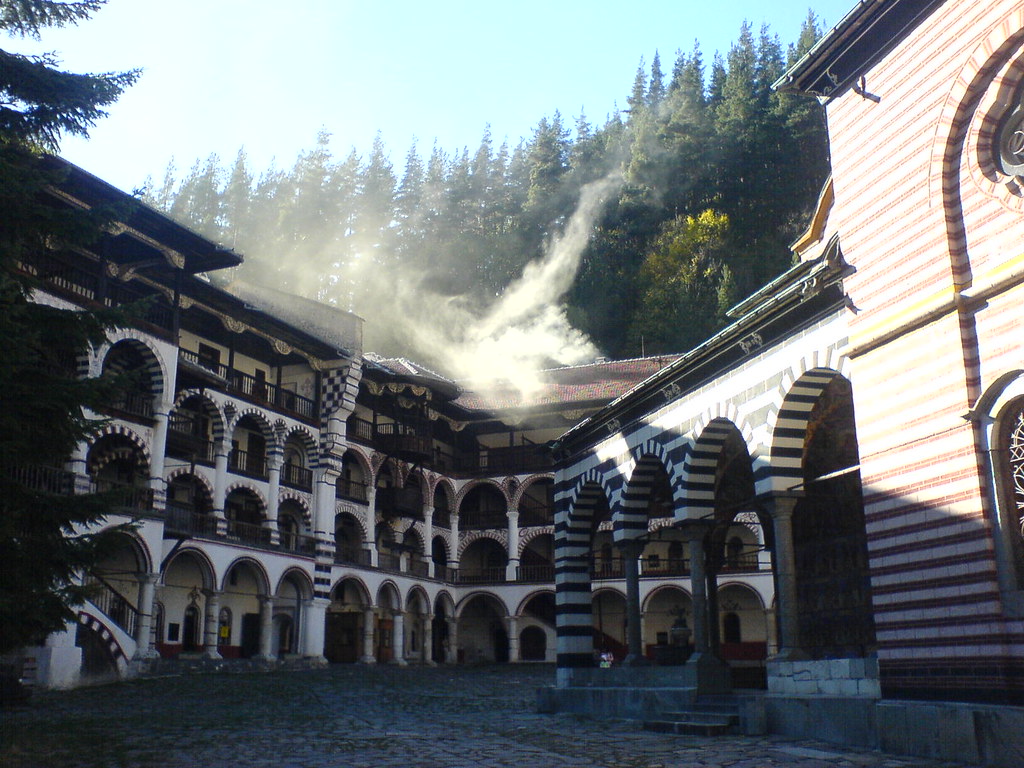
Approaching the fortress-like outer walls of grey stone, nothing prepares you for the visual explosion that greets you upon entering through the heavy wooden Iron Gate. The central courtyard opens into a four-story arcaded cloister of crisp black-and-white striped arches, carved wooden balconies, and wide flagstone pavements, framed dramatically against jagged mountain peaks.
At the courtyard center stands the Main Church of the Nativity of the Virgin, adorned with 1,200 individual fresco compositions painted between 1840 and 1847 by master iconographers including Zahari Zograf. The exterior gallery frescoes depict vivid, terrifying scenes of the Apocalypse and the Last Judgment, with demons dragging corrupted tax collectors, dishonest merchants, and sinners into fiery hellmouths. Immediately beside the church stands Hrelyo's Tower, a 23-meter stone defensive fortress tower erected in 1335 CE that survived multiple devastating fires intact.
2. Plovdiv: Europe's Oldest Continuously Inhabited City
Located 148 kilometers southeast along the smooth Trakia Motorway (A1), Plovdiv is widely recognized as one of the oldest continuously inhabited cities in the world, with documented Neolithic settlements dating back over 8,000 years—predating both classical Athens and Rome. Crowned European Capital of Culture in 2019, Plovdiv combines ancient Roman grandeur with romantic 19th-century Bulgarian National Revival architecture and a thriving contemporary bohemian art scene.
The historic core is built across three dramatic syenite hills (Trimontium). Key highlights that make Plovdiv an unmissable day trip include:
- The Roman Theatre of Philippopolis: Discovered accidentally in the early 1970s following a landslide on Djambaz Tepe, this 2nd-century CE marble amphitheater built under Emperor Trajan seats 6,000 spectators. It remains an active performance venue today, hosting summer operas and rock concerts overlooking the southern Rhodope Mountains.
- The Roman Stadium: Partially excavated beneath the modern marble pedestrian promenade of Knyaz Alexander I, this 240-meter athletic arena could hold 30,000 spectators for ancient Delphian pythian games.
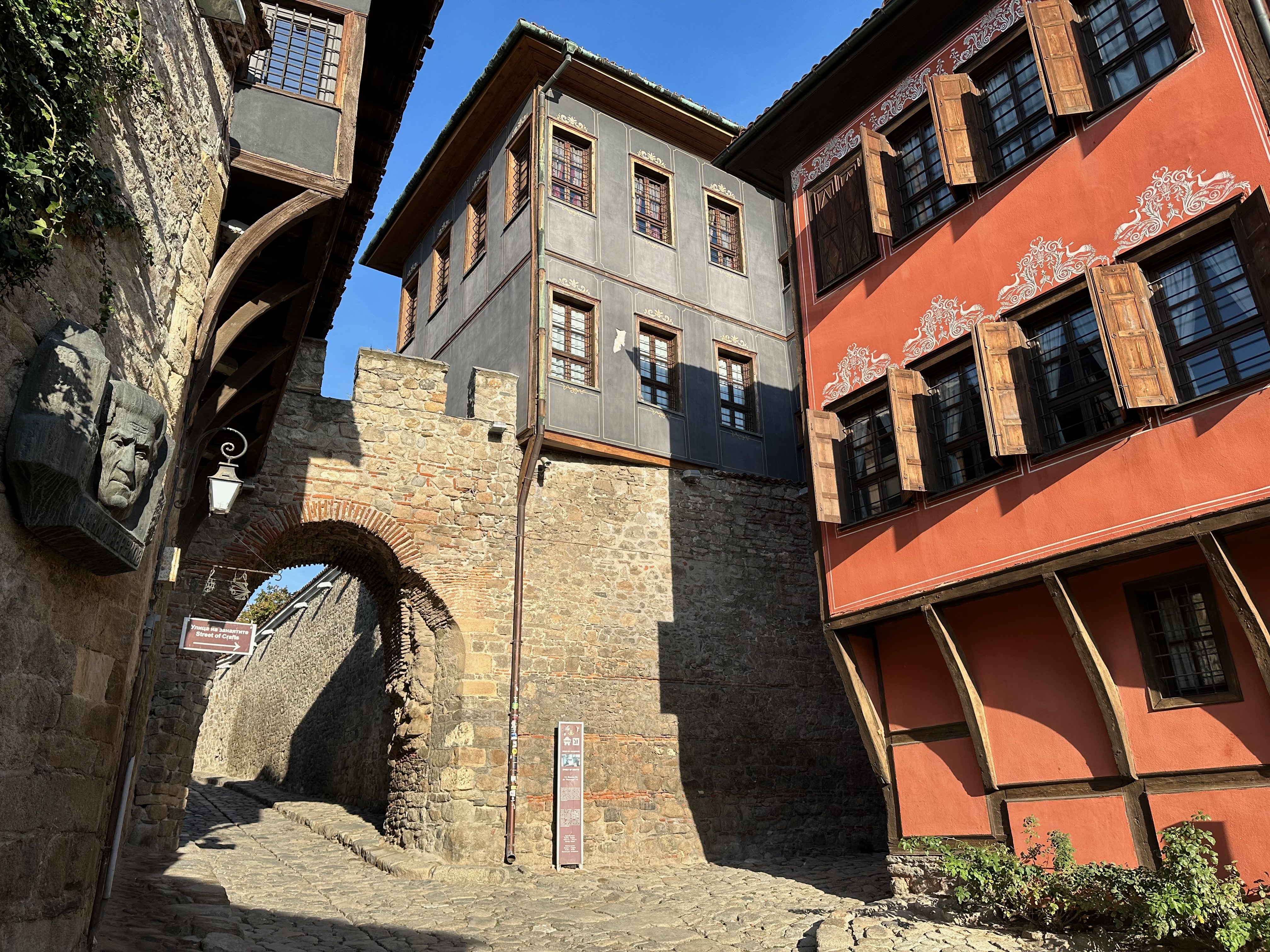
- Old Town (Stari Grad): A cobbled labyrinth of winding lanes lined with flamboyant National Revival wooden merchant mansions with overhanging upper stories (erkers). Visit the Ethnographic Museum housed inside the 1847 Kuyumdzhioglu House and Hindliyan House with its indoor rosewater fountain.
- Kapana Creative District ("The Trap"): A former craft guild quarter transformed into a dense pedestrian grid of independent craft beer bars, artisan roasteries, art galleries, and vinyl record shops.
3. Seven Rila Lakes & 4. Belogradchik Fortress Rocks
The Seven Rila Lakes (Sedemte Ezera)
Alpine Glacial TarnsLocated in the northwestern Rila range between 2,100 and 2,500 meters altitude, each of the seven interconnected glacial tarns bears a descriptive name: Salzata (The Tear, crystal clear at 2,535m), Okoto (The Eye, deepest tarn at 37.5m), Babreka (The Kidney), Bliznaka (The Twin), Trilistnika (The Trefoil), Ribnoto (Fish Lake), and Dolnoto (Lower Lake). Ride the double chairlift from Panichishte and hike the scenic 4-hour panoramic circuit during July–September.
Belogradchik Rocks & Kaleto Fortress
200m Sandstone MonolithsLocated 180 km northwest near the Danube, this surreal landscape features hundreds of 200-meter-high reddish-yellow sandstone rock needles sculpted over 200 million years. Ancient Romans utilized the natural vertical rock walls to build the Kaleto fortress, which was later reinforced by Bulgarian Tsars and Ottoman pashas. Climb the metal ladders to the pinnacle for breathtaking Balkan vistas.
Top Recommended Day Tour Experiences from Sofia
All tours depart from central Sofia, feature English-speaking guides, and include full cancellation flexibility.
 ⭐ #1 Regional Bestseller & UNESCO Double-Site
Rila Monastery & Boyana Church Full-Day UNESCO Tour
- Two UNESCO World Heritage Sites visited in a single seamless full-day excursion
- Boyana Church: Rare 1259 Pre-Renaissance mural frescoes predating Giotto
- Rila Monastery: Bulgaria's spiritual jewel with black-and-white striped cloisters
Top Regional City Excursion
Must-See Plovdiv Day Tour from Sofia
- Explore Europe's oldest continuously inhabited city (8,000+ years of history)
- Magnificently preserved 2nd-century Roman Theatre of Philippopolis & Roman Stadium
- Cobblestone alleys of Old Town Plovdiv with flamboyant National Revival merchant mansions
Rila Monastery & Boyana Church Full-Day UNESCO Tour
Two UNESCO World Heritage Sites visited in a single seamless full-day excursion
Frequently Asked Questions About Sofia
Verified answers to practical visitor inquiries regarding Sofia tourism, prices, safety, and cultural etiquette.
The undisputed #1 day trip from Sofia is UNESCO World Heritage Rila Monastery. Set deep within a lush forested canyon of the Rila Mountains at 1,147 meters elevation, it is the spiritual and cultural heart of Bulgaria. Most day trips pair Rila Monastery with a morning stop at UNESCO Boyana Church on the outskirts of Sofia, providing a seamless double-UNESCO experience for around €23.70 per person.
Yes, absolutely. Plovdiv is located 148 kilometers southeast of Sofia and is easily visited on a day trip. By car or guided minivan tour, the drive via the Trakia Motorway (A1) takes approximately 1 hour and 45 minutes. Regular passenger trains depart Sofia Central Railway Station, taking 2 to 2.5 hours each way (€5.00). Plovdiv's Roman Amphitheatre, cobbled Old Town, and Kapana art district can all be thoroughly explored in 5 to 6 hours.
The most convenient, stress-free option is the daily tourist shuttle bus departing punctually at 09:00 AM from the designated bus bay behind St. Alexander Nevsky Cathedral. The shuttle includes round-trip transit in an air-conditioned coach, stops at Boyana Church first, gives you over 2 hours of free time at Rila Monastery, and returns to Sofia by 17:30. Tickets start around €23.70 on Viator.
The optimal window for hiking the Seven Rila Lakes is from July through mid-September. In May and June, higher lakes (The Eye and The Tear) often remain partially frozen or covered in deep snowfields. A chairlift from the Panichishte resort area takes hikers up to Rila Lakes Hut (2,150m), from where the classic 4- to 5-hour loop trail begins.
Belogradchik Rocks is one of Bulgaria's most striking geological landscapes, featuring 200-meter-high red sandstone pillars integrated into a Roman and Ottoman fortress. However, the drive from Sofia takes approximately 3.5 to 4 hours each way (180 km across mountainous Balkan terrain). It is doable as a very long day trip, but better combined with an overnight stay in Vidin or the northwestern wine region.